API Security: The Complete Guide for Engineering and Security Teams
APIs are the primary attack vector in modern web security. The 2023 and 2024 breach reports consistently show API attacks as the leading cause of data exposure - not because API security is harder to implement than application security, but because organizations are building and deploying APIs faster than their security programs can keep up.
This guide covers API security comprehensively: from discovery through authentication, testing, monitoring, and incident response.
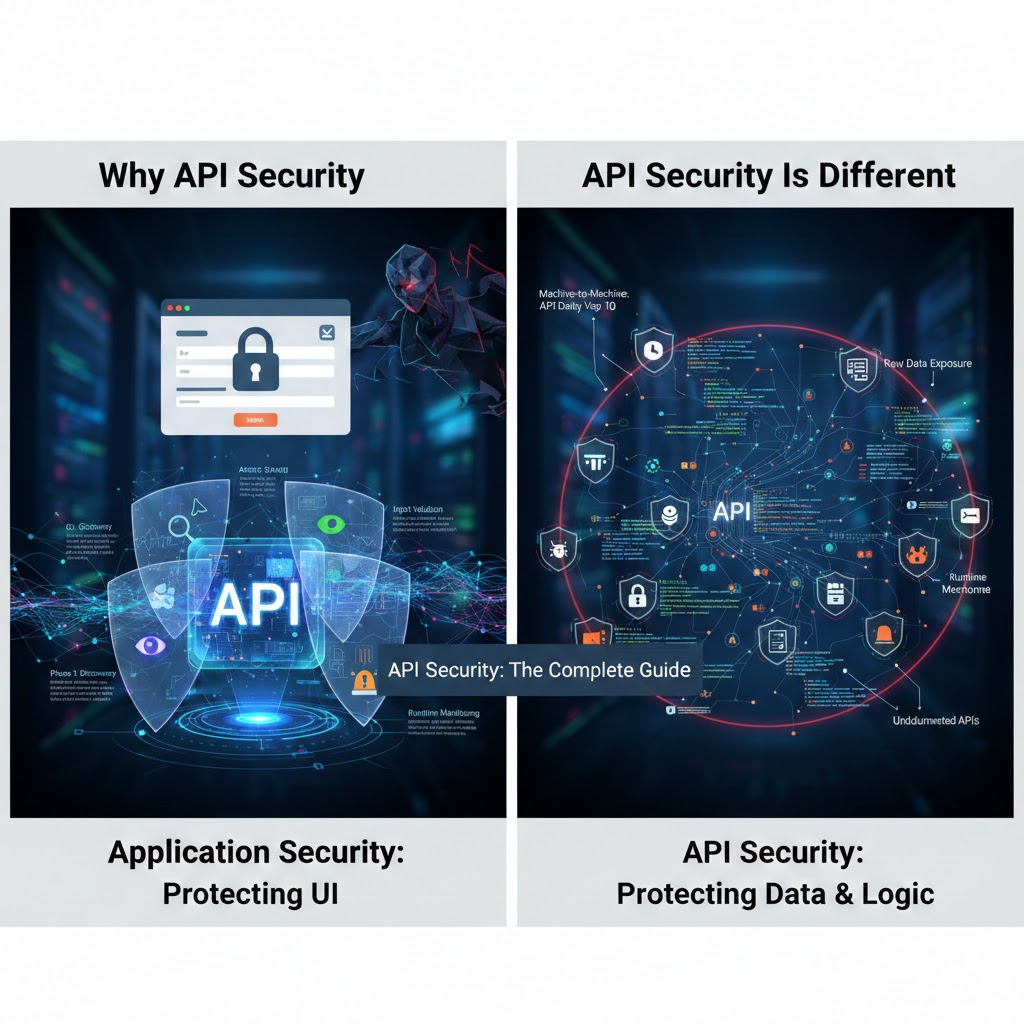
Why API Security Is Different From Application Security
Traditional application security focuses on protecting user interfaces - web pages, forms, file uploads. API security requires a different mindset because APIs:
- Have no browser to enforce same-origin policies
- Are often designed for machine-to-machine communication, making anomaly detection harder
- Frequently expose raw data rather than rendered views, increasing breach impact
- Are often undocumented (especially internal APIs), making inventory management difficult
- Change frequently, making security testing hard to keep current
The OWASP API Security Top 10
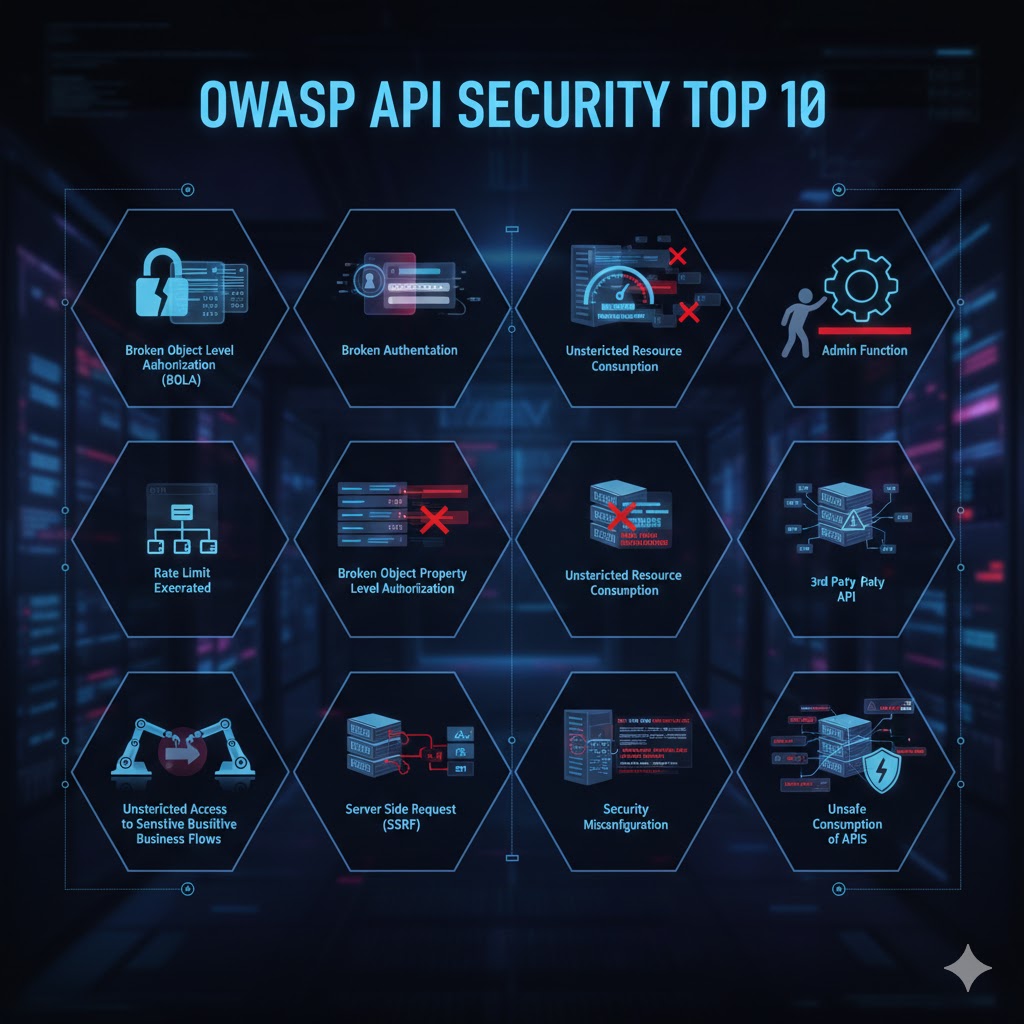
The OWASP API Security Top 10 is the authoritative framework for API vulnerabilities. Understanding these categories is essential for any API security program:
| Rank | Vulnerability | Description |
|---|---|---|
| API1 | Broken Object Level Authorization (BOLA) | Accessing other users' data by manipulating object IDs |
| API2 | Broken Authentication | Weak authentication mechanisms or missing token validation |
| API3 | Broken Object Property Level Authorization | Accessing properties the caller shouldn't have access to |
| API4 | Unrestricted Resource Consumption | No rate limiting, enabling abuse and DoS |
| API5 | Broken Function Level Authorization | Accessing admin functions as a regular user |
| API6 | Unrestricted Access to Sensitive Business Flows | Automating processes meant to be human-only |
| API7 | Server Side Request Forgery (SSRF) | Tricking the server into making requests to internal resources |
| API8 | Security Misconfiguration | Exposed debug interfaces, verbose error messages |
| API9 | Improper Inventory Management | Undocumented APIs, exposed old versions |
| API10 | Unsafe Consumption of APIs | Trusting data from third-party APIs without validation |
Phase 1: API Discovery
You can't secure APIs you don't know about. API discovery is the prerequisite for everything else in an API security program.
Dedups.ai's API discovery continuously maps your API surface using a combination of network traffic analysis, code scanning, and API gateway inventory. This surfaces shadow APIs, deprecated versions still receiving traffic, and internal services accidentally exposed publicly.
Phase 2: Authentication and Authorization
Authentication (who is making this request) and authorization (what are they allowed to do) failures account for the majority of serious API vulnerabilities.
For authentication, enforce:
- JWT validation on every endpoint - not just some
- Short token expiration with refresh token rotation
- Secure storage guidance for API keys (never in client-side code)
- Rate limiting on authentication endpoints to prevent brute force
For authorization, enforce:
- Object-level checks: verify the requester has access to the specific object they're requesting, not just the object type
- Function-level checks: verify the requester has permission to perform the specific action
- Test authorization with multiple user roles, including cross-user access attempts
Phase 3: Input Validation and Data Handling
Every input your API receives from a caller should be treated as potentially malicious.
- Validate data type, format, length, and range for all inputs
- Use parameterized queries - never string concatenation - for database operations
- Limit response payloads to only the fields the caller needs
- Never return stack traces or internal error details in API responses
Phase 4: Security Testing
API security testing should be continuous, not periodic. Implement:
Automated testing at deployment time: Dedups.ai runs automated tests against OWASP API Security Top 10 with each deployment cycle, catching common vulnerabilities before they reach production.
Manual testing for critical endpoints: Business logic vulnerabilities, particularly complex authorization flaws, require manual review by a security engineer or penetration tester.
Fuzz testing: Generate unexpected inputs and observe behavior. APIs that fail ungracefully on unexpected inputs often have deeper security issues.
Phase 5: Runtime Monitoring
Testing catches vulnerabilities before production. Monitoring catches attacks during production.
Key signals to monitor:
- Unusual volumes of 401/403 responses (may indicate credential stuffing or BOLA probing)
- Traffic from new IP ranges or geographic locations
- Requests to rarely-used endpoints
- Unusual request patterns (automated scanning behavior)
Phase 6: Incident Response
When an API security incident occurs, you need:
- Complete API traffic logs (implement structured logging if you haven't)
- Ability to quickly revoke API keys or block IP ranges
- A documented runbook for common incident scenarios
- Clear escalation paths
Ready to Get Started?
API security is achievable without slowing down development velocity - it requires the right tools and workflow integration. Dedups.ai provides continuous API discovery, automated OWASP testing, and runtime monitoring that integrates with your engineering workflow so security keeps pace with development.